
Making the right to water a reality for every child
In marking the Day of the African Child on June 16, 2026 whose theme is, “Ensuring universal access to water, sanitation and hygiene for every child in Africa,” ANPPCAN celebrates many successes achieved in child rights over the years.
In the year 2008, ANPPCAN initiated Child Participation Programme in selected primary schools in Kiambu District, (now Kiambu County). In 2010, we scaled the programme to Busia, Loitokitok, Nairobi and more recently, to Homa Bay County.
In schools reached with this programme, ANPPCAN established and operationalised Child Rights Clubs as an avenue for empowering children on their rights, especially the rights of Orphans and Vulnerable Children.
To date, a record 86 public primary schools have benefited from the programme across the 5 counties.
Members of Child Rights Clubs have been introduced to the four broad categories of child rights, that is, survival rights, development rights, protection rights and participation rights. An important aspect in the survival rights pillar and which is relevant to this years’ theme of the Day of the African Child is the right of a child to access water.
As we implemented CRCs in schools, one core concern that kept recurring across most schools was poor hygiene amongst children and the school environment. This was attributed to lack of water and the poor state of sanitation facilities in schools, including access to toilets and hand-washing points.
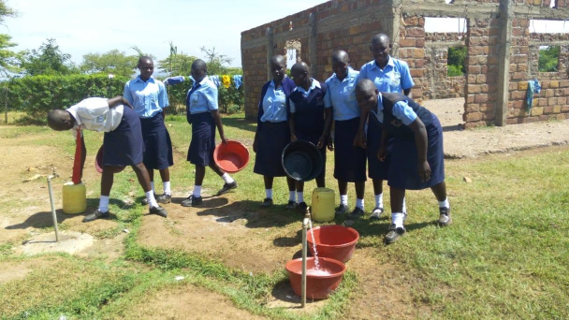
Pupils at Otaro Primary School have access to water in their school. The water is also accessible to community members surrounding the school, thanks to the solar powered water pump system installed by ANPPCAN
Outside schools, the parents and guardians of the children spent long hours looking for water for domestic use. This was valuable time lost that parents and guardians should have spent in productive activities.
Besides, children, especially girls, travelled long distances fetching water in the evenings and over the weekends. In doing so, they fell into incidences of child abuse, including sexual abuse. Lack of water affected their personal hygiene, especially access to menstrual right.
This motivated us to focus on access to water and adequate sanitation facilities in schools. With the support of our development partners, we have installed solar powered water pump system in schools. We have also remodelled and/or constructed sanitation facilities in some schools. Additionally, we have also installed hand-washing points.
Pupils at Otaro Primary School in Rachuonyo North Sub County have access to water in their school. This has improved their hygiene and that of their school. The same water is also accessible to community members surrounding the school, thanks to the solar powered water pump system installed by ANPPCAN
Otaro Primary School in Rachuonyo North Sub County has a solar powered water pump system installed while Kanyamfwa Primary School has water tanks collecting rain water for use by children, teachers and community members. Additionally, sanitation facilities in the two schools have been constructed. In a third school known as Adhiro Comprehensive School, sanitation and toilet facilities were under construction at the time of the Day of the African Child, 2026.
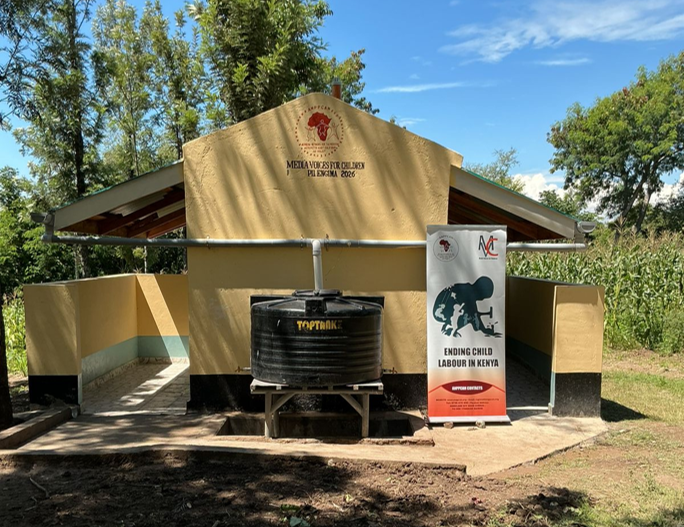
Newly constructed toilet facilities constructed at Adhiro Comprehensive School in Rachuonyo North Sub County. With adequate sanitation facilities, children have less chances of contracting diseases.
With adequate sanitation facilities, children have less chance of contracting diseases arising from poor hygiene. To ensure good functioning and sustainability of the solar powered water pump systems and sanitation facilities in the schools, we formed Community WaSH committees and trained members on maintenance of the facilities.
We are eager to reach every school to ensure the right to access water by children, teachers and community members is a reality.